This sweet Blackberry Cornbread is super easy to make. It makes a delicious breakfast, brunch or side dish. It’s so good served with Blackberry Honey Butter. I love baking my cornbread in a cast iron skillet. It gives the cornbread a crisp, rustic crust. You can also use a cake pan if you prefer. (The baking time may vary.) Make sure not to over bake your cornbread since overtaking will dry it out. Use fresh, ripe blackberries when they’re in season. You can also use frozen blackberries or fresh or frozen blueberries. Skip the macerating step if you’re using blueberries or frozen berries.
¼cups (158g) AP flour, sifted (plus one tsp for the blackberriesAP flour, sifted (plus one tsp for the blackberries)
⅔cup (132g)sugar
¼cup (35g)cornmeal
2teaspoons baking powder
½teaspoon fine sea salt
2largeeggs
¾cup (170g)sour cream
¼cup (57ml)vegetable oil or neutral oil of your choice
2tablespoonsmelted butter
1 ¼cups (6 oz or 170g)ripe blackberries, divided(Cut large berries in half)
Instructions
Preheat the oven to 350°F (180°C). Grease an 8” cast iron skillet* or an 8” round cake pan.
In a large bowl, whisk together the flour, sugar, cornmeal, baking powder and salt.
In a separate bowl, whisk together the eggs, sour cream, oil and melted butter until smooth.
Add the egg mixture to the flour mixture. Mix just until combined. A few lumps are okay. In a small bowl, gently toss one 1 cup (136g) of the blackberries with 1 tsp of flour. Gently fold the berries into the batter.
Transfer the batter to the skillet. Top with the remaining blackberries. Bake until the top is golden brown and toothpick inserted into the center comes out clean, about 35-43 min. Let cool in the pan 10 min. Serve with Blackberry Honey Butter** or honey if desired
Notes
*To find an 8-inch cast iron skillet, click here.**To find the Blackberry Honey Butter Recipe, click here.
My mom had a cupboard in the kitchen containing a few old cookbooks that she rarely used. As a child, I used to enjoy perusing them and looking at the baked treats. Some of the cookbooks were so old, they had black and white photos or even just drawings of the food. The ones with drawings interested me because they often depicted smiling children enjoying the treats.
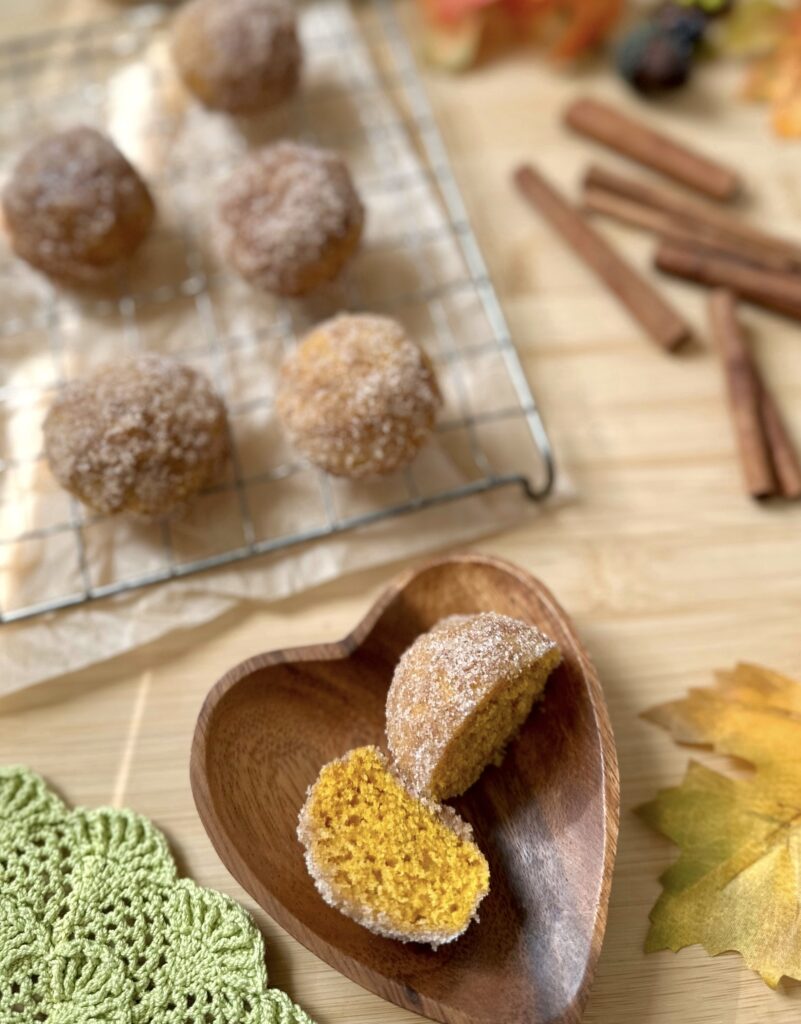
When I started learning to bake, I found a recipe for French Breakfast Puffs in one of those old books. The title sounded so fancy, but they were really just simple muffins dunked in butter and rolled in cinnamon sugar. I have no idea what the name of the cookbook was or what happened to it, but the delicious muffin recipe stuck around for a while. I’ve tweaked the recipe so many times over the years, and most recently, I added pumpkin to it. These Pumpkin Cinnamon Mini Muffins are one of the best versions I’ve created. The inside texture of the muffins is soft and moist and it contrasts nicely with the slight crunch you get from the cinnamon sugar on the outside. They look so cute too, like little pumpkins, and they definitely make children smile!
To watch the Instagram video of these mini muffins being made, click here.
Pumpkin Cinnamon Mini Muffins
Soft, tender pumpkin mini muffins rolled in cinnamon sugar
⅓cup (80ml)vegetable oil or neutral oil of your choice
1largeegg
½cup (113g)canned pure pumpkin puréeNot pie filling
Topping
⅔cup (132g)granulated sugar
1 ½teaspoonsground cinnamon
6tablespoons (85g)melted butter
Instructions
Muffins
Preheat the oven to 350ºF (180ºC). Grease and flour a 24-serving mini muffin pan.* Do not use muffin liners. (The muffins need to form an outer crust. This prevents them from absorbing too much melted butter later in the recipe.)
In a medium-size bowl, whisk together the flour, baking powder, salt, cinnamon, ginger and nutmeg until well combined.
In a large bowl, whisk together the sugar, oil, egg and pumpkin purée until smooth and well combined. Stir in the flour mixture just until combined. The batter will be thick.
Transfer the batter to the prepared pan, filling the muffin cups about 2/3 full. (I ended up with 22 muffins.)
Bake until toothpick inserted into the muffins comes out clean, about 10-13 minutes. Do not over bake! Be diligent, since over baking can happen very quickly with mini muffins. Let the muffins cool in the pan for 5 minutes. Turn the muffins out and place on a cooling rack.
Topping
Whisk the sugar and cinnamon together in a shallow bowl until well combined.
Briefly dunk the warm muffins in melted butter, then roll in cinnamon sugar.
Every peach season, I get excited by the abundance of peaches at my local farmers market and I end up buying way too many. So if you’re like me and you have ripe peaches sitting on your counter, turn them into peach purée. I love adding peach purée to my iced tea or adding it to desserts like this moist, tender cake. This is one of my most popular cake recipes on social media, and for good reason. It does not disappoint! To watch the TikTok video, click here.
Peaches and Cream Loaf Cake
Moist, tender peach cake with peach cream cheese icing
1cuppeach purée, divided(About 1 1/3 cups peeled, sliced peaches puréed in a food processor or blender)
½teaspoonpure vanilla extract
⅛teaspoonpure almond extract
Icing
2tablespoonscream cheese, softened
1tablespoonunsalted butter, softened
1cup (4 ounces)powdered sugar, sifted
¼teaspoon pure vanilla extract
pinchfine sea salt
1-2tablespoonsreserved peach puree
2tablespoonsdiced peaches
Instructions
Cake
Preheat oven to 350ºF. Line the bottom of an 8 x 4-inch loaf pan with parchment paper. Grease and flour the sides.
In a medium bowl, whisk together flour, baking powder, baking soda, salt, cinnamon and nutmeg.
Set aside 2 tablespoons peach purée for icing.
In a large bowl, beat sugar, oil, eggs, remaining peach purée and extracts until smooth.
Add flour mixture and beat just until combined.
Transfer batter to prepared baking pan. Bake until toothpick inserted into center comes out clean, about 38-45 minutes.
Let cake cool in pan for 10 minutes, then turn out onto a cooling rack to cool completely. Spread icing on cooled cake.
Icing
In a medium bowl, beat cream cheese and butter together until smooth.
Add powdered sugar, salt, vanilla extract and 1 tablespoon of peach purée. Beat until smooth. Add additional peach purée, if needed, until desired consistency is reached. Fold in diced peaches.
This cheerful little loaf cake feels like a spring or summer picnic with lemonade and sunshine. It’s similar to a pink lemonade cake that my elderly neighbor used to make when I was growing up. She made it for all the neighborhood kids and we always gobbled it up. When I was about ten years old she taught my friend and me how to make it. She used a yellow cake mix in a large baking pan and poked holes all over the cake, then drenched it in a pink, sugary lemon icing. I transformed that happy pink lemonade memory into a delightful loaf cake made from scratch.
1cup plus 2 tablespoons (5 oz or 142g)all purpose flour, sifted
1teaspoon baking powder
½teaspoonfine sea salt
¼teaspoonbaking soda
¼cup (2 oz or 59ml)whole milk
¼cup (2 oz or 59ml)sour cream
1cup (7 oz or 200g)sugar
½cupvegetable oil or neutral oil of your choice
2largeeggs
1tablespoonlemon zest
1 ½teaspoons strawberry extract
1-2dropspink gel food colorI used Americolor deep pink*
Lemon Syrup
juice of one lemon
¼cup (1 3/4 oz or 50g)sugar
Icing
2tablespoons (1 oz or 28g)unsalted butter, softened
1cup (4 oz or 113g)powdered sugar, sifted
2-2 ½tablespoonslemon juice
½teaspoonstrawberry extract
pinchfine sea salt
1tiny droppink gel food colorI used Americolor deep pink*
Instructions
Pink Lemonade Cake
Preheat oven to 325ºF (163ºC). Line the bottom of an 8 X 4-inch loaf pan with parchment paper. Grease and flour the sides.
In a medium bowl, whisk together the flour, baking powder, salt and baking soda.
In a small bowl, whisk together the milk and sour cream.
In a large bowl, beat the sugar, oil, eggs, lemon zest and strawberry extract until smooth.
Stir in the flour mixture in two additions, alternating with the milk mixture. Stir just until combined. Stir in food color a little at time until your desired shade is achieved.
Transfer the batter to the prepared baking pan. Bake until a toothpick inserted into center of the loaf comes out clean, about 45-50 minutes. Meanwhile, prepare lemon syrup.
Let the cake cool in the pan for 10 minutes, then remove from pan and transfer to a cooling rack. Poke holes all over the top of cake with a skewer.
Brush the warm cake generously with the lemon syrup. Let the cake cool completely, then top with icing.
Lemon Syrup
In a small saucepan, combine the juice of one lemon with enough water to equal 1/4 cup. Add sugar and stir over medium-low heat until sugar is dissolved. Remove from heat.
Icing
In a medium bowl, beat the butter, powdered sugar, 1 tablespoon lemon juice, the strawberry extract and a pinch of salt, until smooth. Add more lemon juice until your desired consistency is reached. Mix in gel food color.
Once upon a time, there was a little black bear who woke up from a long nap. As she stretched, she felt her tummy growl. She ventured into the morning sunshine and smelled something sweet. She sniffed the air, following the sweet fragrance until she came upon a beautiful purple tree. She climbed up to a comfy branch and ate the tender, purple blossoms to her heart’s content.
Bears, butterflies and bees know something good when they see it. We humans can also enjoy lilacs. I knew lilacs were edible, but I hadn’t tasted them until recently. The flavor reminds me of beets, slightly sweet with a vegetable aftertaste. I really wanted to try lilac syrup after seeing so many photos of pretty purple syrup online. I discovered that lilac syrup is not purple. It’s more of a dull, brownish blue-green. Many people use food coloring or blueberries to color their syrup. I also discovered that lilac syrup will turn a pretty shade of mauve by adding a small amount of lemon juice to the finished syrup. Since I would be using my lilac syrup inside of cake layers, I let it remain its natural color. I made a simple syrup with lilac blossoms and let them steep for a couple of hours. It was just long enough to give a subtle lilac flavor without being too floral. If you want a stronger lilac flavor, I suggest using more lilac blossoms rather than steeping longer to avoid bitterness.
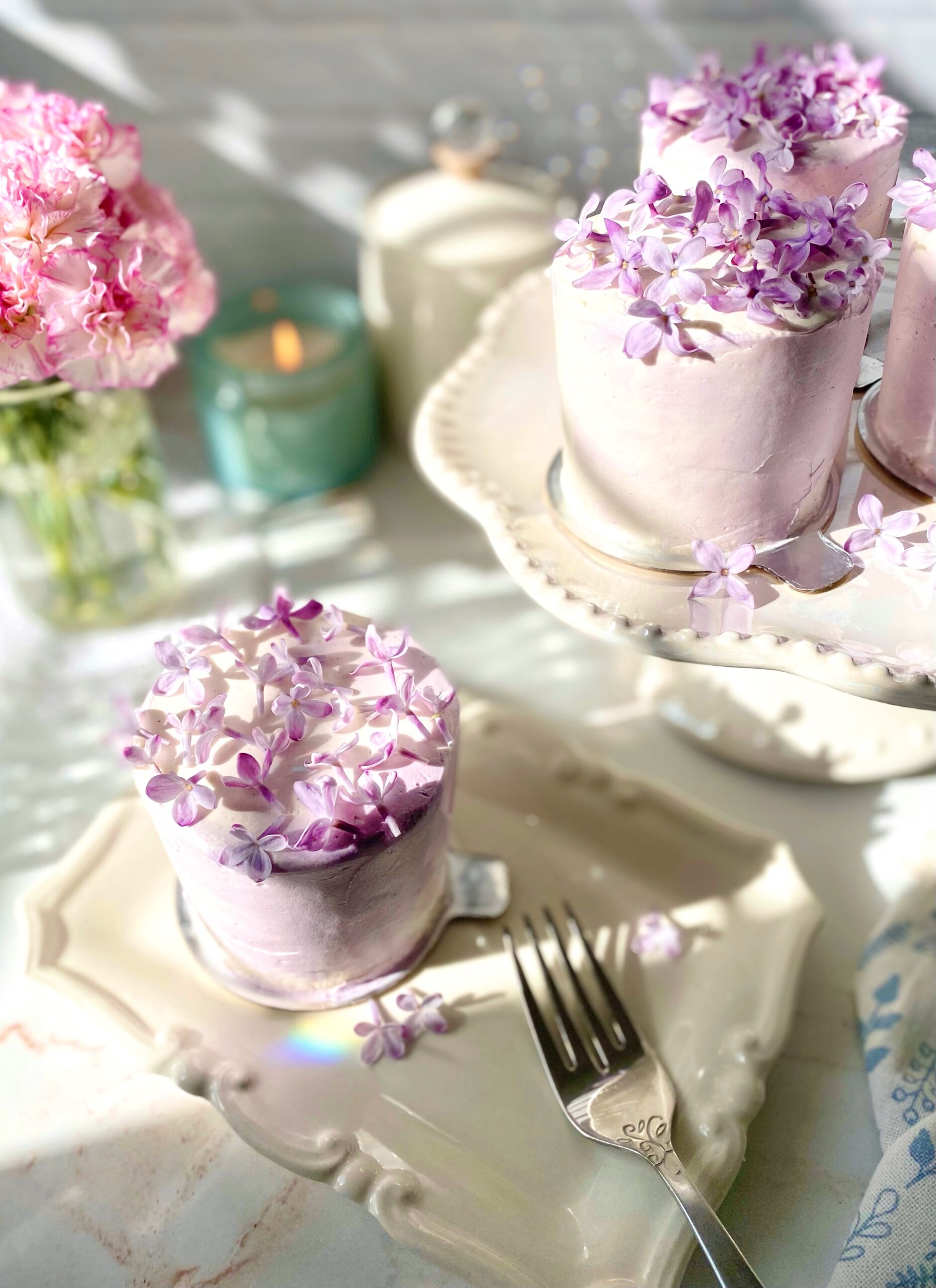
I paired the lilac syrup with this soft, fluffy vanilla cake and silky Swiss meringue buttercream. If you aren’t a fan of lilac syrup, feel free to use vanilla simple syrup instead and just use the lilac blossoms to decorate your cakes. They look stunning on any cake or cupcakes.
Lilac Vanilla Mini Cakes
by Mari Vasseur
Soft, fluffy mini white vanilla cakes with lilac syrup and vanilla Swiss meringue buttercream, topped with lilac blossoms
½ cup (7g)lilac blossoms, rinsed and all stems removed
1teaspoonfresh lemon juiceoptional
White Vanilla Cake
2 ¾cups (319g))cake flour, sifted
2teaspoonsbaking powder
1teaspoonfine sea salt
½cup (113g)unsalted butter, softened
1 ¾cups (350g)ultra fine granulated sugar*Not powdered sugar
¼cup (2 oz or 57ml)vegetable oil or neutral oil of your choice
2teaspoonsvanilla bean paste or pure vanilla extract
4largeegg whites, room temperature
1largeegg, room temperature
½cup (118ml)sour cream, room temperature
1cup (237ml)whole milk, room temperature
Swiss Meringue Buttercream
4largeegg whites
1 ⅓cups (265g)ultra fine granulated sugar*Not powdered sugar
1 ½ cups (340g)softened, unsalted butter, cubed
1teaspoonvanilla bean paste or pure vanilla extract
¼teaspoon fine sea salt
1-2dropslilac gel good colorSee notes below
1dropviolet gel food colorSee notes below
Assembly
63-inch mini cake boards****See notes below
Lilac blossoms, rinsed and all stems removed
Instructions
Lilac Syrup
In a small saucepan combine the sugar and water. Bring to a boil over medium heat, stirring gently to dissolve the sugar. Add the the lilac blossoms and stir gently. Turn the heat down and simmer for 5 minutes.
Remove from heat and allow the lilac blossoms to steep for 2 hours. Pass the lilac syrup through a mesh sieve.
White Vanilla Cake
Preheat the oven to 350ºF (180ºC). Grease and flour two 9-inch round cake pans and line the bottoms with parchment paper.
In a medium-sized bowl, whisk together the cake flour, baking powder and salt until well blended.
In a large bowl, beat the butter, sugar, oil and vanilla bean paste with an electric mixer at medium speed, until pale and fluffy, about 3 minutes.
On medium speed, beat in the egg whites in two additions, then beat in the egg until incorporated. On low speed, beat in one third of the flour mixture, then beat in the sour cream just until combined. Beat in the remaining flour mixture in two additions, alternating with milk. Beat just until combined.
Transfer the batter to prepared cake pans. Bake until the tops of the cakes are light golden brown and a toothpick inserted in center comes out clean, about 28-33 minutes. Do not over bake.
Allow the cakes to cool in the pans for 10 minutes, then remove from the pans and transfer to a cooling rack.
Cut each cake into four 2 3/4-inch rounds using a cookie or biscuit cutter.
Using a pastry brush, brush the mini cakes generously with lilac syrup or vanilla simple syrup.
Swiss Meringue Buttercream
Combine the egg whites and sugar in a large heatproof bowl. Set over a pan of gently simmering water, making sure the water doesn't touch the bottom of the bowl.
Whisk constantly until the sugar is dissolved and a temperature of 160ºF (71ºC) is reached.
Transfer the mixture to the bowl of a stand mixer with a whisk attachment. Whisk on low speed, gradually increasing to medium-high speed. Whisk until glossy, stiff peaks form and the mixture reaches room temperature.
Turn the mixer to medium-low speed. Add the butter, a few pieces at a time, allowing it to fully incorporate before adding more. If the mixture looks curdled, keep mixing and it will correct itself.
Switch to a paddle attachment. On low speed, mix in the vanilla bean paste and salt. Continue mixing on low speed for a few minutes until smooth.
Remove about 3/4 cup of frosting and transfer it to a small bowl. Using a toothpick, place two tiny drops of lilac gel food color and one tiny drop of violet gel food color into the bowl. Mix with a spatula until well combined.
Assembly
Smear a bit of frosting on each mini cake board. Top each one with a cake round, a layer of frosting, then a second cake round. Frost with a crumb coat if desired. Refrigerate of 15 minutes. Frost the mini cakes with white Swiss meringue buttercream, then smear small amounts of lilac Swiss meringue buttercream around the sides and top. Smooth frosting with a bench scraper and smooth the tops with a small offset spatula. Decorate with lilac blossoms.
Vanilla Simple Syrup (optional)
Combine 1/2 cup sugar and 1/2 cup water in a small saucepan. Bring to a boil over medium heat, stirring gently to dissolve the sugar. When the sugar has dissolved, remove from heat and stir in 1 teaspoon vanilla bean paste or pure vanilla extract.
Notes
*If you can't find ultra fine granulated sugar, it's okay to substitute with regular granulated sugar.**To find the lilac gel food color I used, click here.***To find the violet gel food color I used, click here.****To find 3-inch mini cake boards, click here.
Sending sunshine your way with these cute, delicious bite-size mini cakes. Lemon Buttermilk Cakelets are tender and moist with a burst of fresh lemon flavor. They’re easy to make and they bake up quickly. They make an adorable addition to a spring teatime, baby shower or summer picnic.
½cup (115ml)vegetable oil or neutral oil of your choice
2largeeggs
2teaspoons lemon zest
½teaspoonpure vanilla extract
½teaspoon pure lemon extract
½cup (118ml)buttermilk
Icing
1 ½cups (180g)powdered sugar, sifted
1tablespoon (14g)unsalted butter, melted
3-4tablespoons (45-60ml)fresh lemon juice
Instructions
Lemon Simple Syrup
Measure the juice of 1 lemon. Add enough water to equal 1/4 cup (89ml). In a small saucepan, simmer the lemon juice and water mixture with the sugar and lemon zest, stirring occasionally, until the sugar is dissolved. Set aside to cool, then strain out the lemon zest.
Cakelets
Preheat the oven to 350ºF (180ºC). Grease and flour a 24-serving mini muffin pan* or use liners.
In a medium-sized bowl, whisk the flour, baking powder, baking soda and salt together until well blended.
In a large bowl, whisk the sugar, oil, eggs, lemon zest and extracts together until smooth and well blended. Mix in the flour mixture in 2 additions alternating with half of the buttermilk after each addition. Stir just until combined. Do not over mix.
Fill the muffin cups 2/3 full. (I used a portion scoop). Bake until a toothpick inserted into the center of the cakes comes out clean, about 8-10 minutes. Be careful not to over bake to avoid drying out the cakes. Let the cakes cool in the pan for 5 minutes, then remove them from the pan and transfer them to a cooling rack. (Repeat with any remaining batter.)
Icing
In a medium-sized bowl, whisk together the powdered sugar, melted butter and 3 tablespoons of lemon juice. Add additional lemon juice as needed to achieve the desired consistency. Whisk until smooth. Spoon the icing over the cooled cakes.
This is a sweet, fluffy blueberry cornbread that my family loves. It’s heavenly served with honey and butter. I love baking it in a cast iron skillet because of the delicious crust that forms from the steady high heat conducted with cast iron. If you don’t have a cast iron skillet, you can use an 8-inch round cake pan instead. To find the 8-inch cast iron skillet I used, click here.
The texture of this cornbread is more like a quick bread than a cake and my family has always called it cornbread. When I posted this recipe previously, I called it a skillet cornmeal cake because I was trying to shy away from the cornbread police who inevitably show up when I post sweet cornbread recipes. These enforcers of non existent cornbread laws no longer intimidate me because I’ve done my cornbread research. There are different regions who make cornbread in many different ways. Various groups of people in the United States argue over whether or not cornbread should contain sugar. Historically, some people had to add sugar to cornbread because of the lower quality cornmeal they had access to. But the first cornbread was made long before that in ancient Mexico. People then and now use the ingredients available to them to create food that tastes good to them. So by any name, it’s all good.
Blueberry Skillet Cornbread
by Mari Vasseur
Sweet cornbread with blueberries baked in a cast iron skillet.
1 ¼cups (159g)all purpose flour, sifted, plus one teaspoon for the blueberries
⅔cup (132g)sugar
¼cup (35g) cornmeal
2teaspoonsbaking powder
½teaspoon fine sea salt
2largeeggs
¾cup (170g)sour cream
¼ cup (1 7/8 oz or 55ml)vegetable oil or neutral oil of your choice
2tablespoons (28g)unsalted butter, melted
Instructions
Preheat the oven to 350ºF (177ºC). Grease an 8-inch cast iron skillet.*
Set aside 1/4 cup of blueberries. In a small bowl, toss the remaining 1 cup of blueberries with 1 teaspoon of flour.
In a large bowl, whisk together the flour, sugar, cornmeal, baking powder and salt until well blended.
In a medium-sized bowl, whisk together the eggs, sour cream, oil and melted butter until creamy and well combined. Add the egg mixture to flour mixture and stir just until combined. A few small lumps are okay. Gently mix one cup of blueberries into the batter.
Transfer the batter to prepared skillet. Top with the reserved 1/4 cup of blueberries.
Bake until top looks golden brown and a toothpick inserted in center comes out clean, about 35-45 minutes. Let cool in pan for 10 minutes.
Notes
*To find the skillet I used, click here.If you don't have a cast iron skillet, you can use and 8-inch round cake pan.
If you haven’t noticed already, I love little cakes. Mini cakes are not only cute and charming, they’re likely to make you very popular. This recipe makes two darling Mini Hummingbird Cakes, one to keep and one to share. Hummingbird Cake is a delightful way to use your ripe bananas. The version I’m sharing here also contains pineapple, pecans and coconut. This fruity, nutty combination reminds me of spring and would be perfect for Easter or a spring picnic.
Mini Hummingbird Cake
by Mari Vasseur
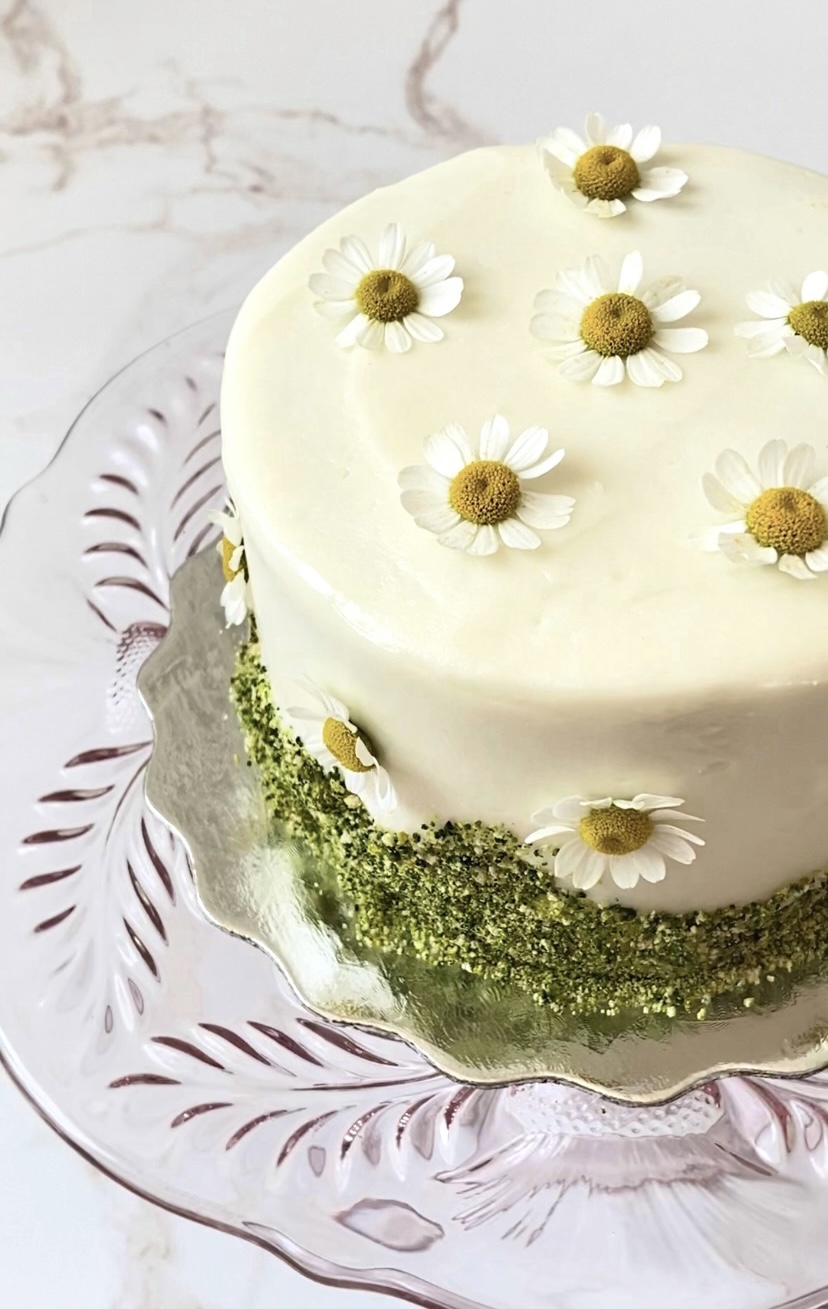
Hummingbird Cakes filled with bananas, pineapple, pecans and coconut, topped with cream cheese frosting and decorated with graham cracker crumb moss and fresh chamomile flowers.
Green gel food colorI used Americolor avocado green**
Yellow gel food coolI used Americolor lemon yellow***
Vodka
6graham crackers (two squares each), crushed
Fresh pesticide free chamomile flowers
Instructions
Hummingbird Cakes
Preheat oven to 350ºF (180ºC). Line the bottoms of four 4-inch cake pans**** with parchment paper. Grease and flour the insides.
In a medium-sized bowl, whisk together the flour, baking soda, salt and cinnamon until well blended.
In a large bowl, beat the butter, sugar, brown sugar and oil with an electric mixer, until pale and fluffy. Beat in the egg, egg yolk, and vanilla extract in three separate additions, making sure each one is incorporated before adding the next. Stir in the bananas, pineapple, pecans and coconut until combined.
Transfer the batter to prepared cake pans, about 1 cup of batter in each pan. Place the filled cake pans on a baking sheet.
Bake until toothpick inserted in centers comes out clean, about 25-28 minutes. Cool the cakes in pans 10 minutes then turn the cakes out onto a cooling rack.
Trim the cakes to 1-inch thickness. Fill, stack and frost the cakes with cream cheese frosting.
Cream Cheese Frosting
In a large bowl, beat the butter with an electric mixer until smooth and pale. Beat 1 tablespoon (15ml)of heavy cream, the vanilla extract and salt into the butter until well combined. On low speed, beat in the powdered sugar a half cup at a time, until well combined.
In a medium-sized bowl, mix cream the cheese with remaining 1 tablespoon (15ml) heavy cream, with a spatula until smooth. On low speed, beat the cream cheese mixture into the butter mixture until smooth and well blended. Smooth out any bubbles by stirring by hand with a spatula.
Decor
To make the graham cracker crumb moss: In two small bowls, dilute 1/8 teaspoon of each gel food color with a few drops of vodka. (Vodka will dissipate as the crumbs dry.) Place the graham cracker crumbs in a plastic food bag. Add diluted food colors a little at a time and seal the bag. Shake the bag and gently massage it to distribute the color. Add more diluted food color as needed until desired your shade of green is reached. Spread the crumbs out onto a parchment lined baking sheet to dry. Apply the crumbs to bottom edges of the frosted cakes.
Notes
*Chop the coconut flakes to achieve a finer texture. This step is optional.**To find the avocado green food color gel I used, click here.***To find the lemon yellow food color gel I used, click here.****To find the 4-inch cake pans I used, click here.