Purée the strawberries in a blender or small food processor. Pass the purée through a mesh sieve into a small saucepan. Stir in the sugar and 1/2 cup (118ml) of water. Bring the mixture to a boil over medium heat. Turn the heat down to low and simmer until the sugar has dissolved and the syrup thickens, about 10 minutes. Set aside to cool. Serve warm or at room temperature.
Pink Whipped Cream
In a large bowl, beat the whipped cream to soft peaks with an electric mixer at high speed. Add the powdered sugar, strawberry extract and food coloring in 3 separate additions. Continue beating just until stiff peaks are formed. Set aside in the refrigerator until ready to use.
Strawberry Rose Pancakes
In a large bowl, whisk the flour, sugar, baking powder and salt together until well combined. Set aside.
Purée the strawberries in a blender or small food processor. Pass the purée through a mesh sieve into a medium bowl. Add the egg, milk, melted butter, vanilla extract and food coloring (if using) and whisk until well combined. Stir this mixture into the flour mixture just until combined. A few lumps are okay. Stir in the rose petals.
For each pancake, scoop 3-4 tablespoons of batter onto a hot oiled griddle. Flip the pancakes when bubbles form on the surface. Continue cooking until the pancakes puff and are lightly browned.
Notes
*To find the gel food coloring I used, click here.**To find culinary dried rose petals, click here.
This cheerful little loaf cake feels like a spring or summer picnic with lemonade and sunshine. It’s similar to a pink lemonade cake that my elderly neighbor used to make when I was growing up. She made it for all the neighborhood kids and we always gobbled it up. When I was about ten years old she taught my friend and me how to make it. She used a yellow cake mix in a large baking pan and poked holes all over the cake, then drenched it in a pink, sugary lemon icing. I transformed that happy pink lemonade memory into a delightful loaf cake made from scratch.
1cup plus 2 tablespoons (5 oz or 142g)all purpose flour, sifted
1teaspoon baking powder
½teaspoonfine sea salt
¼teaspoonbaking soda
¼cup (2 oz or 59ml)whole milk
¼cup (2 oz or 59ml)sour cream
1cup (7 oz or 200g)sugar
½cupvegetable oil or neutral oil of your choice
2largeeggs
1tablespoonlemon zest
1 ½teaspoons strawberry extract
1-2dropspink gel food colorI used Americolor deep pink*
Lemon Syrup
juice of one lemon
¼cup (1 3/4 oz or 50g)sugar
Icing
2tablespoons (1 oz or 28g)unsalted butter, softened
1cup (4 oz or 113g)powdered sugar, sifted
2-2 ½tablespoonslemon juice
½teaspoonstrawberry extract
pinchfine sea salt
1tiny droppink gel food colorI used Americolor deep pink*
Instructions
Pink Lemonade Cake
Preheat oven to 325ºF (163ºC). Line the bottom of an 8 X 4-inch loaf pan with parchment paper. Grease and flour the sides.
In a medium bowl, whisk together the flour, baking powder, salt and baking soda.
In a small bowl, whisk together the milk and sour cream.
In a large bowl, beat the sugar, oil, eggs, lemon zest and strawberry extract until smooth.
Stir in the flour mixture in two additions, alternating with the milk mixture. Stir just until combined. Stir in food color a little at time until your desired shade is achieved.
Transfer the batter to the prepared baking pan. Bake until a toothpick inserted into center of the loaf comes out clean, about 45-50 minutes. Meanwhile, prepare lemon syrup.
Let the cake cool in the pan for 10 minutes, then remove from pan and transfer to a cooling rack. Poke holes all over the top of cake with a skewer.
Brush the warm cake generously with the lemon syrup. Let the cake cool completely, then top with icing.
Lemon Syrup
In a small saucepan, combine the juice of one lemon with enough water to equal 1/4 cup. Add sugar and stir over medium-low heat until sugar is dissolved. Remove from heat.
Icing
In a medium bowl, beat the butter, powdered sugar, 1 tablespoon lemon juice, the strawberry extract and a pinch of salt, until smooth. Add more lemon juice until your desired consistency is reached. Mix in gel food color.
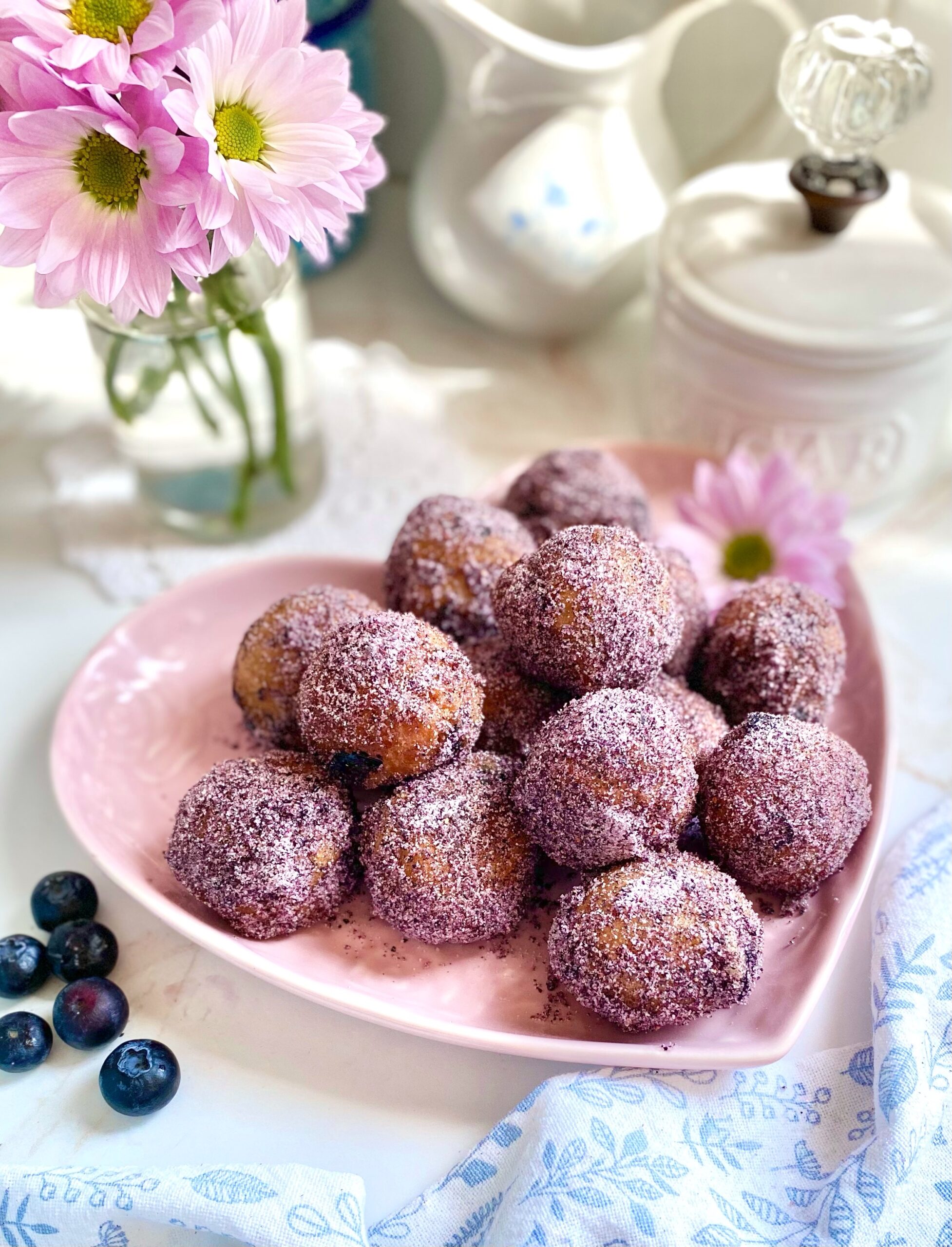
If you landed here from one of my social media accounts, welcome! I’m really glad you’re here. I love to create fun, pretty and sweet treats like these delicious blueberry donut holes! The thing that really makes these special is the homemade blueberry sugar, which adds a burst of blueberry flavor. Freeze dried blueberries are combined with sugar to create a beautiful, flavorful sugar that you can use for many other things. It can also be used in tea, lattes, lemonade, cocktails or sprinkled on cookies or scones. Keep in mind that freeze dried blueberries are not the same as dried blueberries. Dried blueberries still contain some moisture, so they won’t work for this purpose.
The donut hole batter comes together quickly and easily. The most challenging part for me is frying them. I found that using a thermometer and testing one donut hole first, helps you determine the perfect oil temperature. Using a small portion scoop helps you get uniform donut holes. Make sure the outside of the scoop is clean between each donut to help them keep the round shape and avoid pointy tails.
Blueberry Donut Holes with Homemade Blueberry Sugar
2tablespoons (1 oz or 28g))unsalted butter, melted
½cup (4 oz or 118ml)whole milk
1teaspoonpure vanilla extract
1 ¼cupschopped fresh blueberries
oil for frying
½cup (3 1/2 oz or 100g)blueberry sugar
Instructions
Blueberry Sugar
Process freeze dried blueberries and sugar in a food processor or a clean spice grinder until finely ground. Be careful not to over process or you may end up with powdered sugar.
Blueberry Donut Holes
In a medium bowl, whisk together flour, baking powder, nutmeg and salt. Set aside.
In a large bowl, beat sugar, eggs, melted butter, milk and vanilla extract until well combined.
Add flour mixture and mix just until combined. Do not over mix. A few lumps are okay.
Fold in chopped blueberries.
In a heavy saucepan, heat 1 1/2 inches of oil to 340ºF.
Drop tablespoon size portions of batter into hot oil. I used a #60 portion scoop.** Don't overcrowd the pan.
Cook donut holes until golden brown on all sides, about 2-4 minutes, flipping halfway through. If donut holes cook too quickly on the outside, turn heat down.
Briefly drain donut holes on paper towels, then toss warm donut holes in blueberry sugar. Serve immediately.
Notes
Success tips: Use a small ice cream scoop sprayed with nonstick spray to drop donut holes into oil. Make sure the outside of scoop is clean between each donut hole to keep the round shape and avoid tails on your donut holes.*To find freeze dried blueberries, click here.**To find the portion scoop I used, click here.
These little veggie pot pies are so cute and comforting. The crust is incredibly flaky and the filling is so versatile. I used asparagus, carrots and peas for the filling, but feel free to use your favorite vegetables. The possibilities are endless! The small size bakes up quickly and is perfect for lunch or a light dinner. I typically serve these with some fresh fruit or salad greens on the side.
I used vegetable shortening for the crust because it makes the flakiest crust ever and also because the pies can easily be a vegetarian dish. If you’re trying to avoid trans fats, then choose a brand of vegetable shortening that doesn’t contain trans fat or replace some of the vegetable shortening with butter.* Keep in mind that if you replace all of the vegetable shortening with butter, your crust won’t be nearly as flaky.
¾cup (96g)chopped asparagus, celery or green beans
¼cup (32g)all purpose flour
2cups (473ml)vegetable broth
¼cup (59ml)whole milk or oat milk
2tablespoonschopped fresh Italian parsley
½teaspoon fine sea salt (or to taste)
½teaspoonpepper (or to taste)
¼teaspoonground sage
¾cup (100g)frozen peas
Egg wash: 1 egg beaten with 1 tablespoon of waterSee note below**
Instructions
Pie Crust
In a large bowl, whisk together the flour, baking powder and salt. Work the shortening into the flower with your fingertips until flat dime size pieces are formed.
In a small bowl, combine the ice water and vinegar. Sprinkle over the flour mixture a little at a time, mixing just until the dough comes together. You may not need all of the liquid, depending on your climate.
Turn the dough out onto a lightly floured surface. Fold the dough over onto itself a few times. Do not over work the dough. Form the dough into a disc. Wrap in plastic wrap and refrigerate for 1-2 hours or up to overnight.
Filling
Preheat the oven to 400ºF. (200ºC). Grease four 6-oz ramekins.*** Place the ramekins on a baking sheet.
In a medium saucepan, melt the butter over medium heat. Sauté the onions, carrots and asparagus for a few minutes until the onions are translucent.
Sprinkle the vegetables with flour. Cook 1-2 minutes. Stir in the broth and simmer until thickened. Add the milk, parsley and seasonings. Make sure to taste your sauce to adjust the seasonings to your preference. Stir in the peas. Transfer the filling to the greased ramekins.
On a lightly floured surface, roll the pie dough to 1/4-inch thickness. Cut out 4 rounds of dough about an inch larger than the tops of your ramekins. Brush the top edges of the ramekins with a bit of egg wash. Place the rounds of dough on the ramekins, overlapping a bit. Crimp the edges of the dough with your fingers or with a fork. Brush the pies with egg wash. Cut a 3/4-inch ventilation slit in the top of each pie. Bake until golden brown, about 30-35 minutes.
Notes
*To replace part of the shortening with butter, use 1/4 cup (48g) shortening and 1/4 cup (57g) butter.**For a vegetarian version, you can substitute the egg wash by brushing the tops of the pies lightly with olive oil.***To find the ramekins I used, click here.
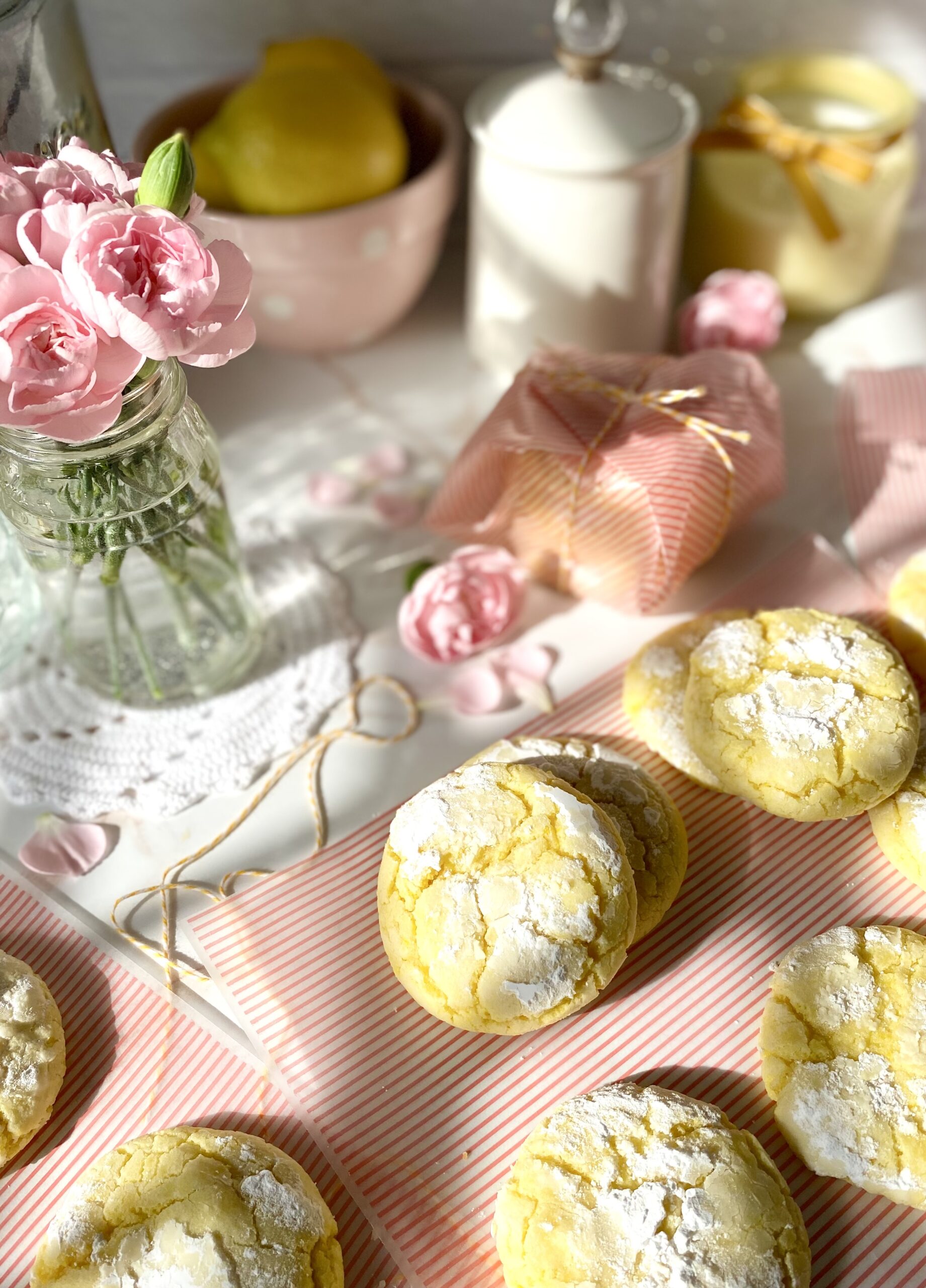
Crinkle cookies, also known as crackle cookies, have been around for a very long time. The pretty, crispy, cracked exterior and the soft, moist interior are what we love about them! There’s definitely no shortage of recipes for crinkles out there, everything from chocolate to red velvet. I even saw an audacious cookie company selling lemon crinkles for twelve dollars each, more money than it will cost for this entire batch! So many of the recipes I tried were disappointing, especially the ones made with cake mix. So I created my own version which happened to go viral! Here’s to making sure delicious lemon crinkle cookies are available for all to enjoy.
This recipe requires a bit of chilling, which I know many people don’t like because they’re impatient. I happen to be one of those people. Old fashioned crinkle cookies require about 3 hours of chilling. My recipe has the addition of cornstarch, which helps prevent spreading and allows for a shorter chilling time. As an added bonus, cornstarch makes the cookies more tender. Win win!
Fresh lemon zest and lemon juice in these cookies is crucial to the best lemon flavor. A bit of pure lemon extract is added to enhance that flavor. Don’t be tempted to use imitation extracts. The flavor will disappoint you. I added two drops of lemon yellow food color, which made them so pretty they look like pure sunshine!
Lemon Crinkle Cookies
Lemon cookies with a crackled, crispy exterior and a soft, tender interior
1-2dropsyellow gel food coloring (optional)*I used Americolor lemon yellow
½cup (60g)powdered sugar
Instructions
In a medium-sized bowl, whisk together the flour, cornstarch, baking powder, salt and baking soda until well blended.
In a large bowl, beat the butter, sugar and lemon zest together until pale and fluffy. Beat in the egg until well incorporated. Mix in the lemon juice, extracts and food coloring until well combined. Add the flour mixture and mix just until combined.
Refrigerate the cookie dough for 30 minutes to one hour.
Meanwhile, preheat the oven to 350ºF (180ºC). Line two large cookie sheets with parchment paper.
Roll the dough into balls, about 2 tablespoons each. I used a #30 portion scoop*. Roll the dough balls generously in powdered sugar.
Place the dough balls about 2 inches apart onto the prepared baking sheets.
Bake until the cookies are set, about 10-12 minutes. Let them cool on the cookie sheet for 1 minute then transfer to a cooling rack.
Notes
*To find Americolor lemon yellow gel food color, click here.**To find a #30 cookie scoop, click here.To find the striped wax paper pictured above, click here.
Once upon a time, there was a little black bear who woke up from a long nap. As she stretched, she felt her tummy growl. She ventured into the morning sunshine and smelled something sweet. She sniffed the air, following the sweet fragrance until she came upon a beautiful purple tree. She climbed up to a comfy branch and ate the tender, purple blossoms to her heart’s content.
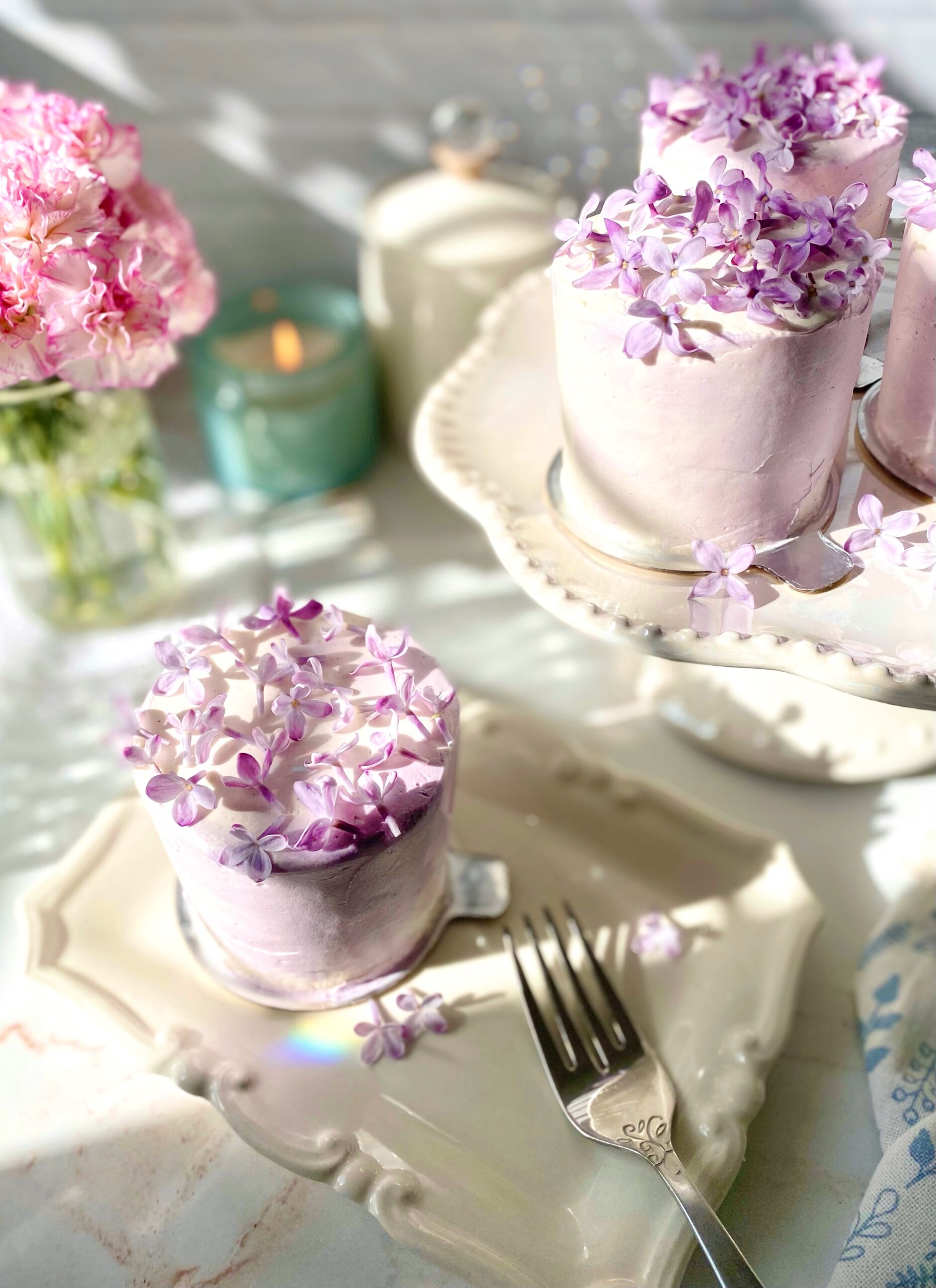
Bears, butterflies and bees know something good when they see it. We humans can also enjoy lilacs. I knew lilacs were edible, but I hadn’t tasted them until recently. The flavor reminds me of beets, slightly sweet with a vegetable aftertaste. I really wanted to try lilac syrup after seeing so many photos of pretty purple syrup online. I discovered that lilac syrup is not purple. It’s more of a dull, brownish blue-green. Many people use food coloring or blueberries to color their syrup. I also discovered that lilac syrup will turn a pretty shade of mauve by adding a small amount of lemon juice to the finished syrup. Since I would be using my lilac syrup inside of cake layers, I let it remain its natural color. I made a simple syrup with lilac blossoms and let them steep for a couple of hours. It was just long enough to give a subtle lilac flavor without being too floral. If you want a stronger lilac flavor, I suggest using more lilac blossoms rather than steeping longer to avoid bitterness.
I paired the lilac syrup with this soft, fluffy vanilla cake and silky Swiss meringue buttercream. If you aren’t a fan of lilac syrup, feel free to use vanilla simple syrup instead and just use the lilac blossoms to decorate your cakes. They look stunning on any cake or cupcakes.
Lilac Vanilla Mini Cakes
by Mari Vasseur
Soft, fluffy mini white vanilla cakes with lilac syrup and vanilla Swiss meringue buttercream, topped with lilac blossoms
½ cup (7g)lilac blossoms, rinsed and all stems removed
1teaspoonfresh lemon juiceoptional
White Vanilla Cake
2 ¾cups (319g))cake flour, sifted
2teaspoonsbaking powder
1teaspoonfine sea salt
½cup (113g)unsalted butter, softened
1 ¾cups (350g)ultra fine granulated sugar*Not powdered sugar
¼cup (2 oz or 57ml)vegetable oil or neutral oil of your choice
2teaspoonsvanilla bean paste or pure vanilla extract
4largeegg whites, room temperature
1largeegg, room temperature
½cup (118ml)sour cream, room temperature
1cup (237ml)whole milk, room temperature
Swiss Meringue Buttercream
4largeegg whites
1 ⅓cups (265g)ultra fine granulated sugar*Not powdered sugar
1 ½ cups (340g)softened, unsalted butter, cubed
1teaspoonvanilla bean paste or pure vanilla extract
¼teaspoon fine sea salt
1-2dropslilac gel good colorSee notes below
1dropviolet gel food colorSee notes below
Assembly
63-inch mini cake boards****See notes below
Lilac blossoms, rinsed and all stems removed
Instructions
Lilac Syrup
In a small saucepan combine the sugar and water. Bring to a boil over medium heat, stirring gently to dissolve the sugar. Add the the lilac blossoms and stir gently. Turn the heat down and simmer for 5 minutes.
Remove from heat and allow the lilac blossoms to steep for 2 hours. Pass the lilac syrup through a mesh sieve.
White Vanilla Cake
Preheat the oven to 350ºF (180ºC). Grease and flour two 9-inch round cake pans and line the bottoms with parchment paper.
In a medium-sized bowl, whisk together the cake flour, baking powder and salt until well blended.
In a large bowl, beat the butter, sugar, oil and vanilla bean paste with an electric mixer at medium speed, until pale and fluffy, about 3 minutes.
On medium speed, beat in the egg whites in two additions, then beat in the egg until incorporated. On low speed, beat in one third of the flour mixture, then beat in the sour cream just until combined. Beat in the remaining flour mixture in two additions, alternating with milk. Beat just until combined.
Transfer the batter to prepared cake pans. Bake until the tops of the cakes are light golden brown and a toothpick inserted in center comes out clean, about 28-33 minutes. Do not over bake.
Allow the cakes to cool in the pans for 10 minutes, then remove from the pans and transfer to a cooling rack.
Cut each cake into four 2 3/4-inch rounds using a cookie or biscuit cutter.
Using a pastry brush, brush the mini cakes generously with lilac syrup or vanilla simple syrup.
Swiss Meringue Buttercream
Combine the egg whites and sugar in a large heatproof bowl. Set over a pan of gently simmering water, making sure the water doesn't touch the bottom of the bowl.
Whisk constantly until the sugar is dissolved and a temperature of 160ºF (71ºC) is reached.
Transfer the mixture to the bowl of a stand mixer with a whisk attachment. Whisk on low speed, gradually increasing to medium-high speed. Whisk until glossy, stiff peaks form and the mixture reaches room temperature.
Turn the mixer to medium-low speed. Add the butter, a few pieces at a time, allowing it to fully incorporate before adding more. If the mixture looks curdled, keep mixing and it will correct itself.
Switch to a paddle attachment. On low speed, mix in the vanilla bean paste and salt. Continue mixing on low speed for a few minutes until smooth.
Remove about 3/4 cup of frosting and transfer it to a small bowl. Using a toothpick, place two tiny drops of lilac gel food color and one tiny drop of violet gel food color into the bowl. Mix with a spatula until well combined.
Assembly
Smear a bit of frosting on each mini cake board. Top each one with a cake round, a layer of frosting, then a second cake round. Frost with a crumb coat if desired. Refrigerate of 15 minutes. Frost the mini cakes with white Swiss meringue buttercream, then smear small amounts of lilac Swiss meringue buttercream around the sides and top. Smooth frosting with a bench scraper and smooth the tops with a small offset spatula. Decorate with lilac blossoms.
Vanilla Simple Syrup (optional)
Combine 1/2 cup sugar and 1/2 cup water in a small saucepan. Bring to a boil over medium heat, stirring gently to dissolve the sugar. When the sugar has dissolved, remove from heat and stir in 1 teaspoon vanilla bean paste or pure vanilla extract.
Notes
*If you can't find ultra fine granulated sugar, it's okay to substitute with regular granulated sugar.**To find the lilac gel food color I used, click here.***To find the violet gel food color I used, click here.****To find 3-inch mini cake boards, click here.
This moist, flavorful banana bread is my favorite banana bread recipe to date. It has the perfect texture. Not mushy or gummy like so many banana bread recipes out there. I like to add chocolate chips and/or toasted pecans to make it extra delicious.
Favorite Banana Bread
by Mari Vasseur
Moist, flavorful banana bread with chocolate chips and optional pecans
1 ½cups (191g)all purpose flour, sifted, plus 1 teaspoon for the chocolate chips
1teaspoon baking powder
½teaspoonbaking soda
½teaspoon fine sea salt
½teaspooncinnamon
¼teaspoonground nutmeg, preferably freshly ground
1cup (200g)packed brown sugar
⅓cup (70ml)avocado oil or neutral oil of your choice
2largeeggs, room temperature
½cup (113g)sour cream or full fat Greek yogurt, room temperature
1 ½teaspoonspure vanilla extract
¾cup (170g)mashed bananas(about 2 medium bananas)
½cup (60g)coarsely chopped toasted pecansoptional
2tablespoons (15g)chopped pecansoptional
1 ¼cups (213g)semisweet chocolate chips, divided
Instructions
Preheat the oven to 350ºF (165ºC). Line the bottom an 8 x 4-inch or a 9 x 5-inch loaf pan with parchment paper. Grease and flour the insides.
In a medium-sized bowl, whisk together the flour, baking powder, baking soda, salt, cinnamon and nutmeg until well blended.
In a large bowl, whisk together the brown sugar, oil, eggs, sour cream and vanilla until creamy and well blended. Stir in the bananas until incorporated. Mix in the flour mixture just until combined. Do not over mix. Stir in the 1/2 cup of pecans if using. If using chocolate chips, set aside 1/4 cup (43g) for the top and toss the remaining 1 cup (170g) of chocolate chips with 1 teaspoon of flour, then mix them into the batter.
Transfer the batter to the prepared loaf pan. Sprinkle the loaf with the chopped pecans or 1/4 cup (43g) of chocolate chips. Bake until a toothpick inserted into the center of the loaf comes out clean, about 40-50 minutes. Cool in the pan for 10 minutes, then remove the loaf from the pan and transfer it to a cooling rack to cool completely.
Ever since a certain celebrity cut a hole from the middle of her favorite olive oil cake back in 2020, the internet has been obsessed with olive oil cakes. I must confess that I was a fan of olive oil cakes long before that. I first tasted one at a restaurant years ago and fell in love. The flavor and texture was so delightful, that all it needed was a dusting of powdered sugar on top. Now that the dust has settled, I’m sharing my favorite orange olive oil cake recipe. Not because it’s trendy, but because it’s a really delicious recipe that tastes like spring.
I made cute little orange scented, personal cakes that are really just elegant cupcakes. The recipe is easily adapted to your tastes. You can switch up the orange flavor and substitute with lemon or any citrus of your choice. Even if you don’t like olive oil, you’ll still like these little cakes. I used light olive oil, rather than extra virgin olive oil, for a more subtle olive oil flavor. It’s also able to withstand higher temperatures. Feel free to use your favorite olive oil or replace it with the oil you prefer. Grape seed, avocado, canola and vegetable oil are some examples of oils you can use as a replacement.
This recipe contains almond flour. It helps with texture and flavor, so it’s a necessary ingredient. Almond flour can be pricey, but it’s good to have on hand. Adding it to your baked goods will make them more moist and tender. To find almond flour click here,
Mini Orange Olive Oil Cakes
Mari Vasseur
Soft, tender mini orange cakes brushed with orange syrup & dusted with powdered sugar
Heat the oven to 350ºF (180ºC). Grease and flour a 12 serving muffin pan.
In a medium-sized bowl, whisk together the cake flour, almond flour, baking powder, baking soda and salt until well blended.
In a large bowl, beat the sugar, eggs, orange zest and vanilla extract together until smooth. Gradually mix in the olive oil and beat until creamy and well blended.
Stir in the dry ingredients in two additions, alternating with the milk and orange juice. Stir just until combined. Do not over mix.
Fill the prepared muffin pan cups 2/3 full with batter. Do not overfill or cakes will be more difficult to remove.
Bake for 10-12 minutes or until the tops look light golden, but still moist and a toothpick inserted comes out clean. They bake very quickly, so check them a few minutes early to avoid over baking.
Cool the cakes in pan for 5 minutes. Remove them from pan and transfer to a cooling rack. Brush the warm cakes with orange simple syrup and allow to cool completely. When the cakes have cooled, dust with powdered sugar.
Orange Simple Syrup
In a small saucepan, stir together the sugar, orange juice, lemon juice, and orange zest. Cook over low heat, stirring occasionally, just until the sugar is dissolved.
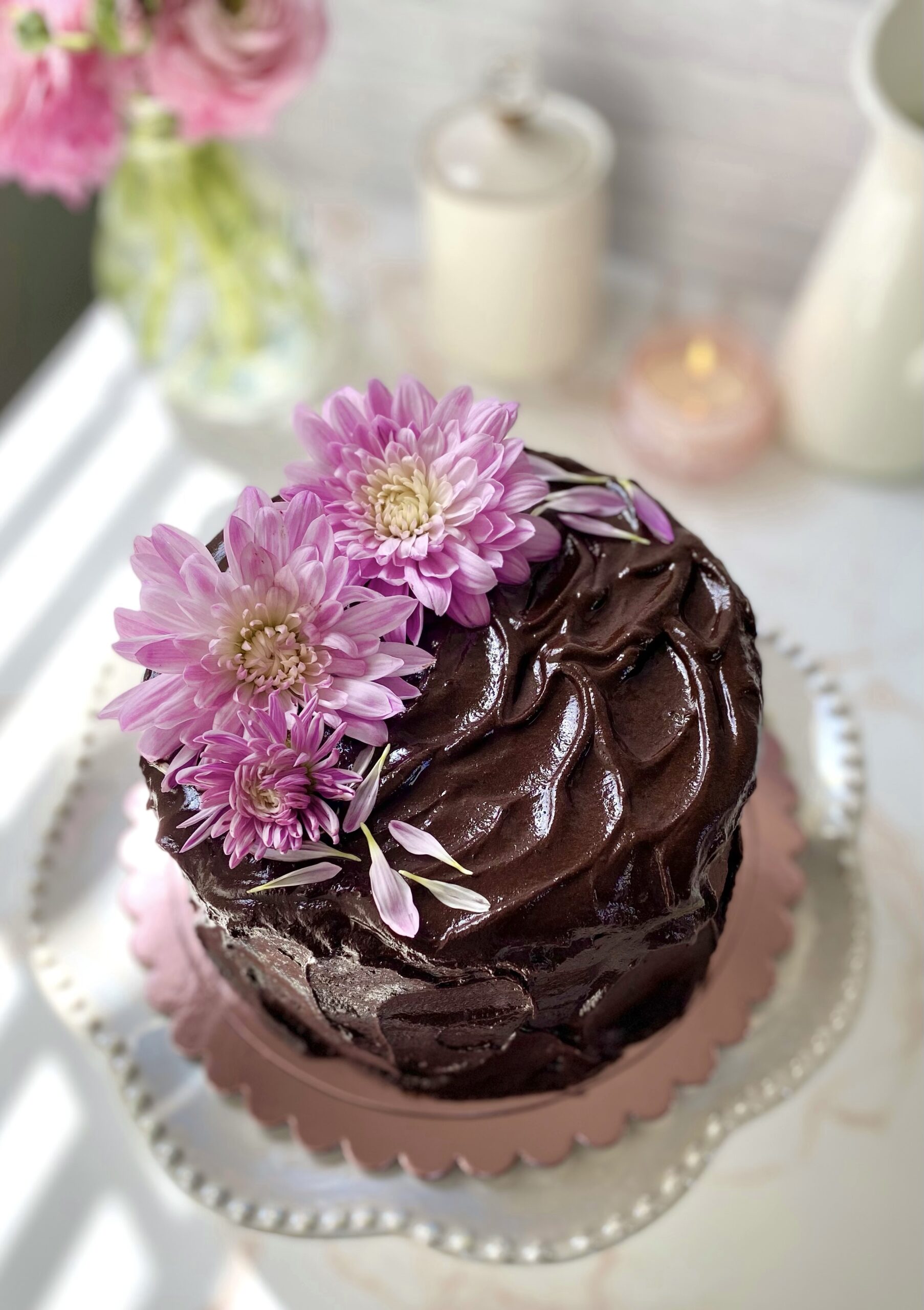
If you love chocolate cake, this is the post for you! Chocolate cake is one of the best comfort foods there is. I’ve tasted many over the years, but my all time favorite was one I had growing up. I’ve spent years trying to duplicate the moist, nostalgic cake from my childhood. I noticed that nearly every chocolate cake recipe on the internet is a variation of the century-old recipe from the Hershey’s Cocoa tin. I think many people have passed it down as a family recipe, each grandmother adding her own personal touch. Even some celebrity chefs have claimed it as their own. It’s an easy, delicious, moist recipe and its popularity is well deserved. You can tweak the flavor additions a bit to make it your own too. It’s a recipe that’s hard to mess up.
This cake is topped with the ultimate silky, smooth, deeply chocolate frosting. I developed this recipe mostly because I couldn’t find a chocolate frosting recipe that didn’t taste gritty and/or look speckled from the cocoa powder. Swiss meringue buttercream with melted chocolate added is one alternative. But, while it is smooth, silky and perfect for piping, it’s missing that deep chocolate richness. Another option is chocolate ganache. It looks rich and creamy in those viral videos, but it’s a little too rich and overpowering to use as frosting in my opinion.
I think this frosting is the one! It has the best of both worlds, velvety but not too rich. You’ll notice that this frosting contains maple syrup. The syrup gives it a very subtle maple flavor in the background, but mostly, it helps to make the frosting silky and gives it shine. You can adjust the sweetness level of the frosting by choosing the chocolate you prefer. I used bittersweet chocolate, which I think is just right. This recipe makes enough frosting to frost a 2-layer 6-inch cake. You can easily double the recipe for larger cakes.
Vintage Chocolate Cake
by Mari Vasseur
Rich moist classic chocolate cake with silky chocolate buttercream frosting
1 ⅛cup (145g)all purpose flour, siftedPlus more for dusting the pans
½cup (45g)unsweetened cocoa powder, siftedPlus more for dusting the pans
1teaspoonbaking powder
½teaspoonbaking soda
¾teaspoonfine sea salt
1 ⅓cups (265g)sugar
1largeegg
1largeegg yolk
⅔cup (155ml)buttermilk
⅓cup (70ml)vegetable oil
1 ½teaspoonspure vanilla extract
⅔cup (155ml)hot coffee or espresso
Chocolate Buttercream Frosting
½cup (148ml)pure maple syrup
3tablespoons (45ml)water
¾cup (67g)unsweetened Dutch process or dark cocoa powder, sifted
½teaspoonespresso powderoptional
1 ¼cups (283g)unsalted butter, softened
1cup (113g)powdered sugar, sifted
⅛teaspoonfine sea salt
8oz (227g)dark, bittersweet or semi-sweet chocolate, chopped*not chocolate chips
Instructions
Chocolate Cake
Preheat the oven to 350ºF (180ºC). Line the bottoms of two 6-inch cake pans with parchment paper. Grease the insides and dust with a mixture of equal parts flour and cocoa powder. Wrap the cake pans with damp cake strips if you have them.
Sift the flour, cocoa powder, baking powder, baking soda and salt together in a medium-sized bowl. Add the sugar and stir until well blended.
Combine the the egg, egg yolk, buttermilk, vegetable oil and vanilla extract in a small bowl. Whisk lightly to combine.
Add the egg mixture to the dry ingredients and beat, on low speed with an electric mixer, until combined. Stop the mixer. Scrape the sides and the bottom of the bowl with a spatula. Turn the mixer up to medium speed and beat for 30 seconds. Add the hot coffee and stir until well combined.
Pour the batter into the prepared cake pans, dividing batter evenly between the pans. Bake until a toothpick inserted into the center of the cakes comes out clean, about 25-28 minutes without cake strips or about 28-32 minutes with cake strips.
Let the cakes cool in the pans for 10 minutes then remove the cakes from the pans and transfer to a cooling rack.
Trim the cake layers to your desired thickness, from 1-inch to 1 1/2-inches thick. Fill and frost with chocolate buttercream frosting.
Chocolate Buttercream Frosting
In a small saucepan over low heat, whisk together the maple syrup, water, cocoa powder and espresso powder until smooth. Set aside to cool to room temperature.
Melt the chocolate in a medium-sized heat safe bowl set over a pan of gently simmering water, making sure the water doesn't touch the bottom of the bowl. Remove from heat and set aside to cool to lukewarm.
In a large bowl, beat the butter with an electric mixer at medium speed, until smooth and pale. Add the powdered sugar and salt and continue beating until smooth and well combined. Gradually add the the cooled maple syrup mixture and beat on low speed until combined. Stir in the melted chocolate until well blended. Smooth out any air bubbles by stirring gently with a rubber spatula.
Notes
*For smoothest results, use chopped bar chocolate and make sure chocolate is completely melted. Do not use chocolate chips. Chocolate chips do not melt completely and can make your frosting lumpy.
Sending sunshine your way with these cute, delicious bite-size mini cakes. Lemon Buttermilk Cakelets are tender and moist with a burst of fresh lemon flavor. They’re easy to make and they bake up quickly. They make an adorable addition to a spring teatime, baby shower or summer picnic.
½cup (115ml)vegetable oil or neutral oil of your choice
2largeeggs
2teaspoons lemon zest
½teaspoonpure vanilla extract
½teaspoon pure lemon extract
½cup (118ml)buttermilk
Icing
1 ½cups (180g)powdered sugar, sifted
1tablespoon (14g)unsalted butter, melted
3-4tablespoons (45-60ml)fresh lemon juice
Instructions
Lemon Simple Syrup
Measure the juice of 1 lemon. Add enough water to equal 1/4 cup (89ml). In a small saucepan, simmer the lemon juice and water mixture with the sugar and lemon zest, stirring occasionally, until the sugar is dissolved. Set aside to cool, then strain out the lemon zest.
Cakelets
Preheat the oven to 350ºF (180ºC). Grease and flour a 24-serving mini muffin pan* or use liners.
In a medium-sized bowl, whisk the flour, baking powder, baking soda and salt together until well blended.
In a large bowl, whisk the sugar, oil, eggs, lemon zest and extracts together until smooth and well blended. Mix in the flour mixture in 2 additions alternating with half of the buttermilk after each addition. Stir just until combined. Do not over mix.
Fill the muffin cups 2/3 full. (I used a portion scoop). Bake until a toothpick inserted into the center of the cakes comes out clean, about 8-10 minutes. Be careful not to over bake to avoid drying out the cakes. Let the cakes cool in the pan for 5 minutes, then remove them from the pan and transfer them to a cooling rack. (Repeat with any remaining batter.)
Icing
In a medium-sized bowl, whisk together the powdered sugar, melted butter and 3 tablespoons of lemon juice. Add additional lemon juice as needed to achieve the desired consistency. Whisk until smooth. Spoon the icing over the cooled cakes.
This is a sweet, fluffy blueberry cornbread that my family loves. It’s heavenly served with honey and butter. I love baking it in a cast iron skillet because of the delicious crust that forms from the steady high heat conducted with cast iron. If you don’t have a cast iron skillet, you can use an 8-inch round cake pan instead. To find the 8-inch cast iron skillet I used, click here.
The texture of this cornbread is more like a quick bread than a cake and my family has always called it cornbread. When I posted this recipe previously, I called it a skillet cornmeal cake because I was trying to shy away from the cornbread police who inevitably show up when I post sweet cornbread recipes. These enforcers of non existent cornbread laws no longer intimidate me because I’ve done my cornbread research. There are different regions who make cornbread in many different ways. Various groups of people in the United States argue over whether or not cornbread should contain sugar. Historically, some people had to add sugar to cornbread because of the lower quality cornmeal they had access to. But the first cornbread was made long before that in ancient Mexico. People then and now use the ingredients available to them to create food that tastes good to them. So by any name, it’s all good.
Blueberry Skillet Cornbread
by Mari Vasseur
Sweet cornbread with blueberries baked in a cast iron skillet.
1 ¼cups (159g)all purpose flour, sifted, plus one teaspoon for the blueberries
⅔cup (132g)sugar
¼cup (35g) cornmeal
2teaspoonsbaking powder
½teaspoon fine sea salt
2largeeggs
¾cup (170g)sour cream
¼ cup (1 7/8 oz or 55ml)vegetable oil or neutral oil of your choice
2tablespoons (28g)unsalted butter, melted
Instructions
Preheat the oven to 350ºF (177ºC). Grease an 8-inch cast iron skillet.*
Set aside 1/4 cup of blueberries. In a small bowl, toss the remaining 1 cup of blueberries with 1 teaspoon of flour.
In a large bowl, whisk together the flour, sugar, cornmeal, baking powder and salt until well blended.
In a medium-sized bowl, whisk together the eggs, sour cream, oil and melted butter until creamy and well combined. Add the egg mixture to flour mixture and stir just until combined. A few small lumps are okay. Gently mix one cup of blueberries into the batter.
Transfer the batter to prepared skillet. Top with the reserved 1/4 cup of blueberries.
Bake until top looks golden brown and a toothpick inserted in center comes out clean, about 35-45 minutes. Let cool in pan for 10 minutes.
Notes
*To find the skillet I used, click here.If you don't have a cast iron skillet, you can use and 8-inch round cake pan.
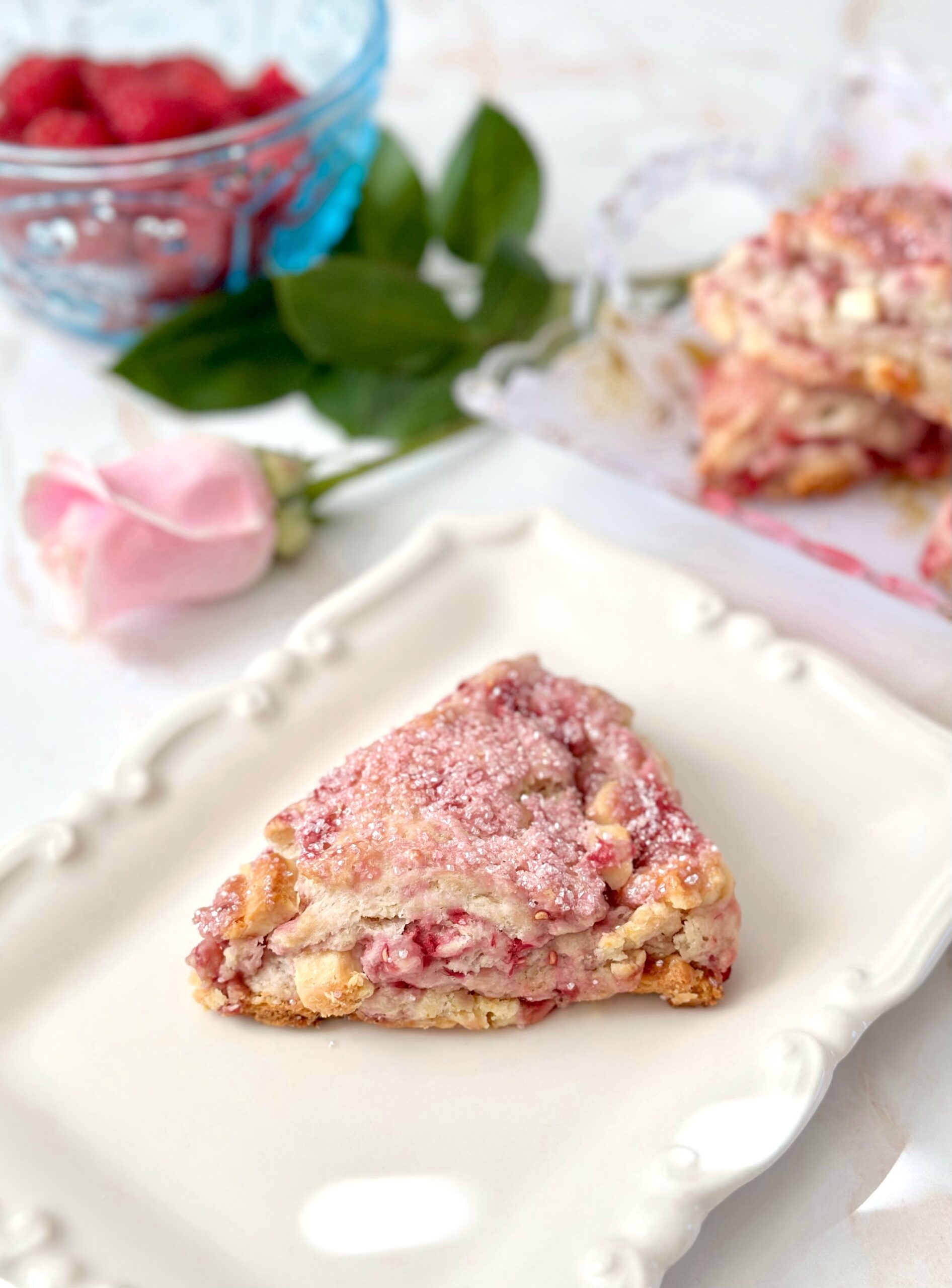
A good scone has a way of making you feel elegant, especially if you pronounce it ‘skon’ instead of ‘skōne’. I went to a lovely tea recently where scones were served, along with an array of dainty tea sandwiches and desserts. The scones were round with pink sugar sprinkled on top. Pretty pink food is always so promising. Unfortunately, the scones were hard, dry and bland. No amount of clotted cream slathered on them could help. There’s nothing elegant about a dry, hard bite of a scone that you have to struggle to choke down. Scones should be dense and slightly dry and crumbly, but there’s no reason we can’t make them more delicious. It’s fun to add fruit, chocolate, herbs, nuts or whatever you like to make them more delightful. These Raspberry White Chocolate Scones are tender and buttery with bursts of flavor from the fresh raspberries and white chocolate. I added pink sparkling sugar for texture and, of course, to make them look pretty!
Raspberry White Chocolate Scones
by Mari Vasseur
Tender scones with fresh raspberries and white chocolate, topped with crunchy sparkling sugar.
½cup (118 ml)cold heavy cream plus extra for the tops of the scones
¼cup (57g)cold sour cream
1teaspoonpure vanilla extract
¾cup (128g)white chocolate chips or chunksNot chopped white chocolate
¾ cup (113g)fresh or frozen raspberries
Pink or white coarse sparkling sugar
Instructions
Line a large baking sheet with parchment paper.
In a large bowl, whisk the flour, baking powder and salt together until well combined. Work the butter into the flour mixture with your fingertips or with a pastry blender until pea size pieces form.
In a small bowl, whisk together the heavy cream, sour cream and vanilla until well blended. Stir the cream mixture into the flour mixture until a shaggy dough forms. Gently fold in the white chocolate chips and raspberries.
Turn the dough out onto a lightly floured surface. Form the dough into a 1-inch thick round, about 6 1/2 inches in diameter. Cut the dough into 8 wedges.
Place scones 2 inches apart on the prepared baking sheet. Chill the scones in the refrigerator for 20 minutes.
Meanwhile, preheat the oven to 375ºF (190ºC). Brush the tops of the scones with heavy cream. Sprinkle with coarse sugar.
Bake until the edges look golden brown, about 20-24 minutes. Transfer the scones to a cooling rack.
Notes
*To find pink sparkling sugar, click here.This recipe was updated on 3/23/2023.